Chicken salad sandwich showdown: Tesco vs Sainsbury's vs Asda vs Morrisons vs Waitrose vs Co-op
Published 5 September 2026
Every meal deal in Britain has a chicken salad sandwich in it somewhere, and they look interchangeable on the shelf: chicken, mayonnaise, salad, malted bread. However, there is an 89 calorie gap between the lightest and the heaviest of the six, and the biggest macro gap is in sugar, where the richest sandwich has 1.9 times as much as the leanest. We compared all six sandwiches and ranked them on calories, protein, fibre, sugar, fat, saturated fat, salt and ingredients.
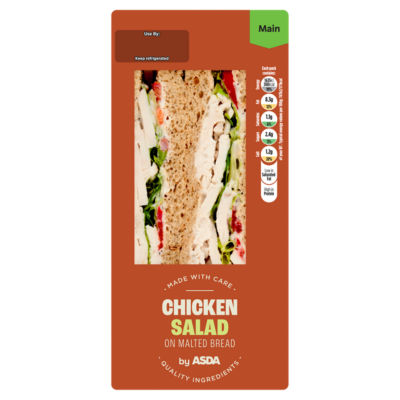
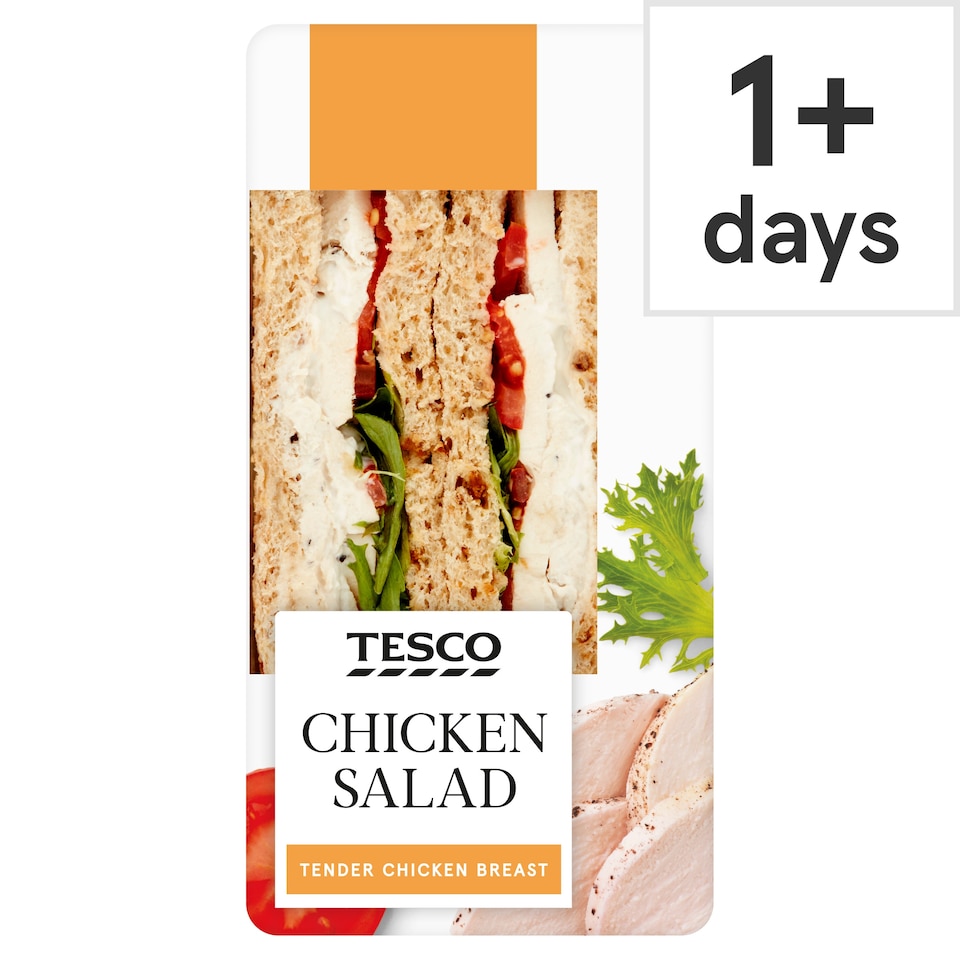
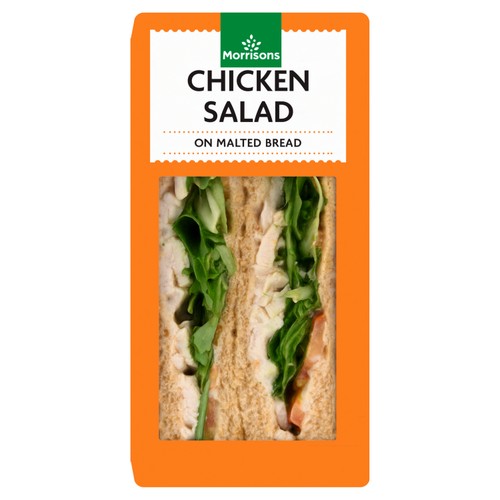
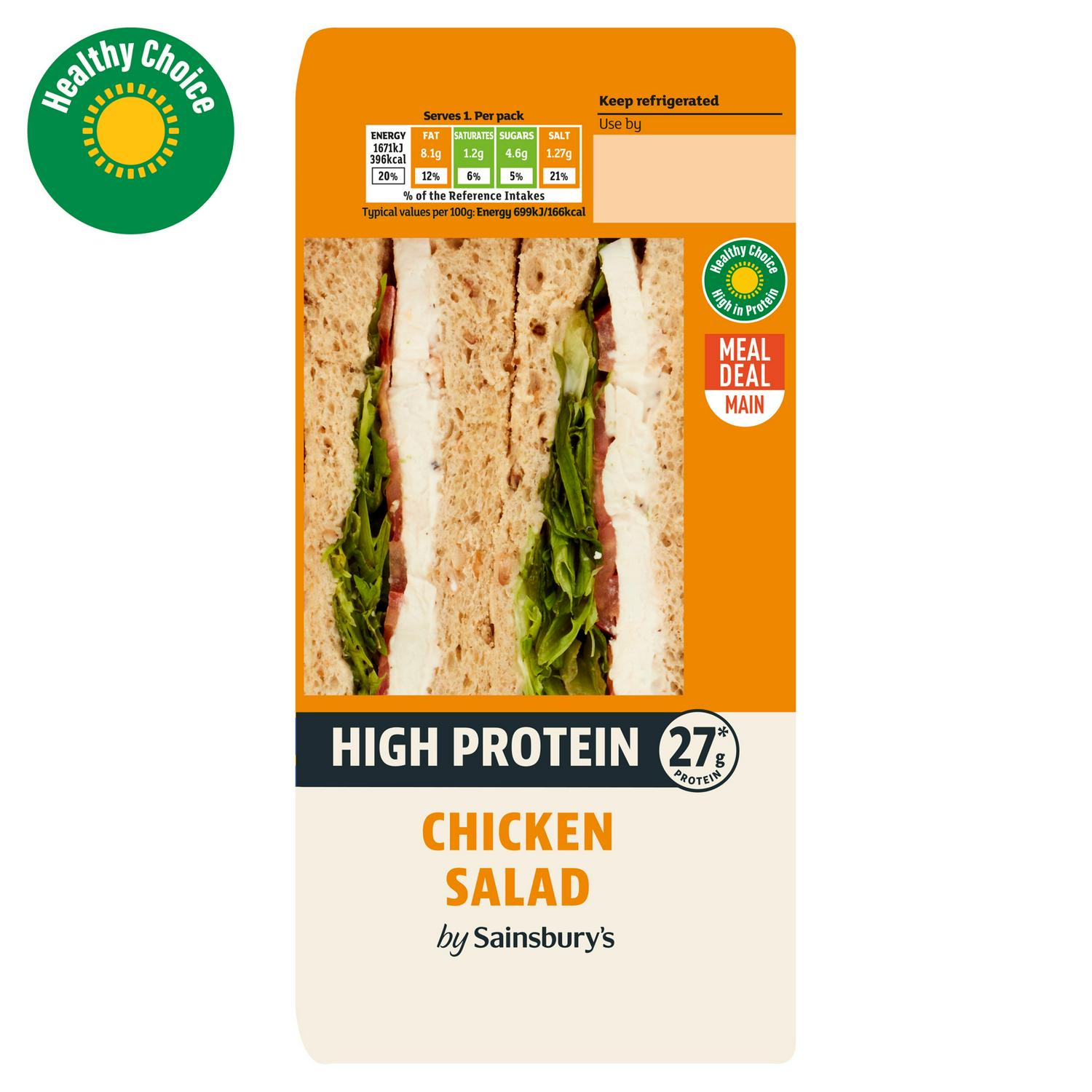
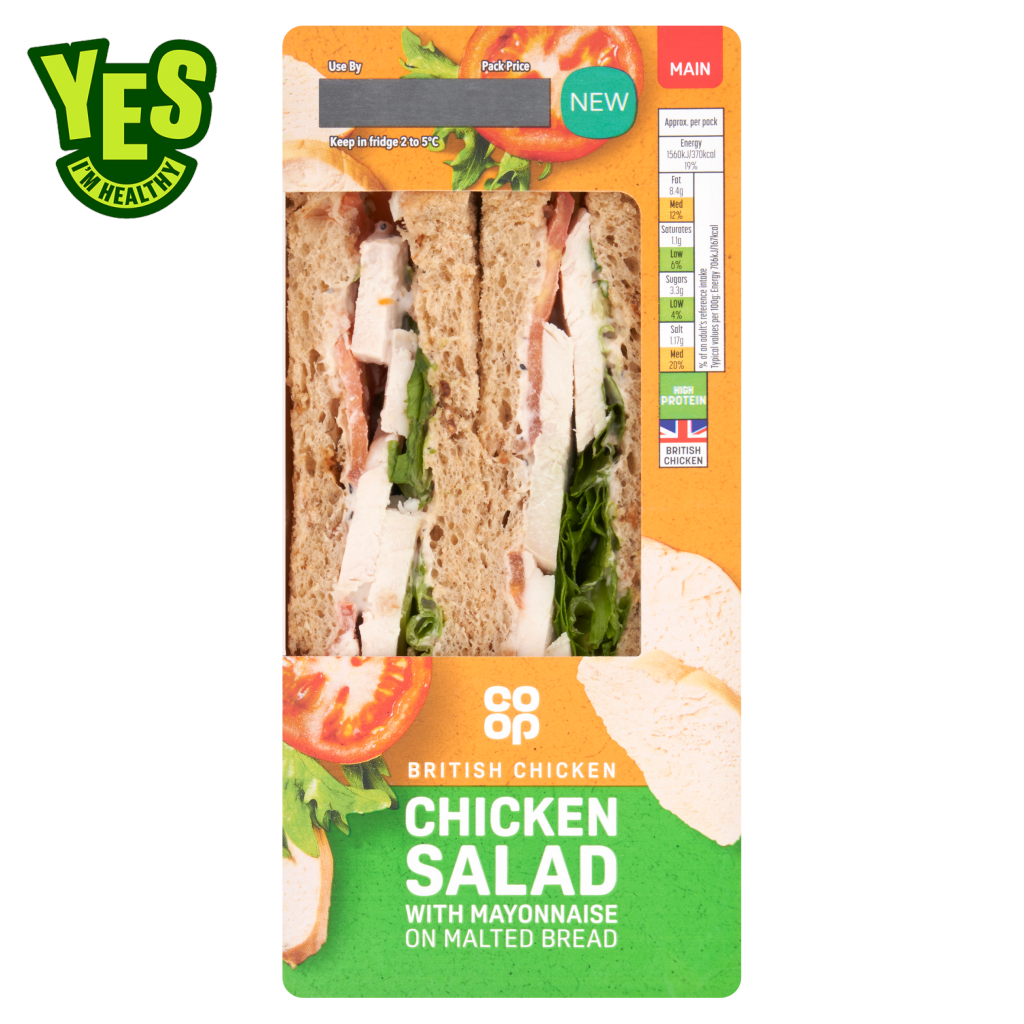

1. Calories
A calorie is just a unit of energy. Your body burns them to keep your heart beating and your organs running even at rest, and burns more on top of that for movement, digestion and everything else you do in a day. Food and drink are where that energy comes from, and the calorie count on a label is a measure of how much of it a given sandwich supplies.
It is also the one figure most people assume is the whole story. It isn't. More calories just means more energy, and whether that's a problem depends on the rest of your day, not the sandwich in isolation. Someone who is active, or who skips a big dinner, can eat the heaviest sandwich here without it being a bad choice. We still rank it, low to high, because a lighter lunch leaves more room in your day all else being equal, but it is one data point among seven, not a verdict on its own.
Waitrose comes in lowest at 310 kcal, and Sainsbury's highest at 399 kcal.
- 1.Waitrose310 kcal
- 2.Morrisons350 kcal
- 3.Tesco360 kcal
- 4.Co-op370 kcal
- 5.Asda388 kcal
- 6.Sainsbury's399 kcal
2. Protein, and protein per calorie
Protein is one of the three macronutrients, alongside fat and carbohydrate, and it is made up of amino acids that your body uses as building blocks. It builds and repairs muscle, but it is also what your skin, hair, enzymes and much of your immune system are made from, not just a gym supplement.
The generic label reference is 50g a day, but the NHS rule of thumb is about 0.75g per kilogram of body weight, closer to 55g a day for an average man. See NHS: eating a balanced diet.
Sainsbury's has the most protein at 27.5g, and Morrisons the least at 21.9g.
- 1.Sainsbury's27.5g
- 2.Tesco26.0g
- 3.Co-op26.0g
- 4.Asda25.0g
- 5.Waitrose24.3g
- 6.Morrisons21.9g
A bigger protein number means nothing if it arrives with even more calories attached, though, so here is the same six ranked by protein per 100 calories instead of protein per sandwich. The order changes.
Waitrose delivers the most protein per calorie, at 7.8g per 100 kcal. Morrisons delivers the least, at 6.3g per 100 kcal.
- 1.Waitrose7.8g/100kcal
- 2.Tesco7.2g/100kcal
- 3.Co-op7.0g/100kcal
- 4.Sainsbury's6.9g/100kcal
- 5.Asda6.4g/100kcal
- 6.Morrisons6.3g/100kcal
3. Fibre
Fibre is a type of carbohydrate that your body can't fully digest. Instead of being broken down for energy like sugar or starch, most of it passes through your gut largely intact, which is exactly why it matters: it adds bulk, feeds the bacteria in your gut, and slows down digestion in a way that helps keep you full.
It supports digestion and is linked to a lower risk of heart disease and bowel cancer. The UK target is 30g a day; most adults get closer to 20g. None of these sandwiches put fibre on the front of the pack, and the gap between the highest and lowest here is wider than the gap in sugar or salt. See NHS: how to get more fibre into your diet.
Waitrose has the most fibre at 6.4g, around half again as much as Morrisons's 4.2g at the bottom.
- 1.Waitrose6.4g
- 2.Sainsbury's5.0g
- 3.Asda4.6g
- 4.Co-op4.4g
- 5.Tesco4.3g
- 6.Morrisons4.2g
4. Sugar
The sugar figure on a label covers every sugar in the product, whether it was added during manufacturing or occurs naturally, like the small amount in tomatoes or the lactose in a splash of milk. Chemically your body treats it the same way either source it came from: sugar is a quickly digested carbohydrate that's absorbed quickly and used for energy or stored.
What the NHS limits is free sugars specifically, meaning added sugar rather than what's naturally locked inside a whole food. That's capped at 30g a day because of the link to tooth decay and excess calorie intake, and that's before a drink or a snack joins the sandwich in the meal deal. See NHS: sugar, the facts.
Asda has the least sugar at 2.4g, and Sainsbury's the most at 4.6g.
- 1.Asda2.4g
- 2.Morrisons2.7g
- 3.Waitrose2.9g
- 4.Co-op3.3g
- 5.Tesco4.5g
- 6.Sainsbury's4.6g
5. Fat
Fat is the most concentrated source of energy of the three macronutrients, and your body genuinely needs some of it: it helps you absorb certain vitamins and is a component of every cell membrane you have. The type matters more than the total, though. Unsaturated fats, the kind in the rapeseed oil in these mayonnaises, are generally fine in normal amounts. Saturated fat is the part worth watching, because it raises the cholesterol in your blood, which raises heart disease risk.
NHS guidance caps saturated fat at 30g a day for an average man and 20g for an average woman, not the unisex 20g figure on the label. See NHS: how to eat less saturated fat.
Waitrose has the least total fat at 5.6g, and Co-op the most at 8.4g.
- 1.Waitrose5.6g fat
- 2.Tesco5.8g fat
- 3.Morrisons7.0g fat
- 4.Sainsbury's8.1g fat
- 5.Asda8.3g fat
- 6.Co-op8.4g fat
On saturated fat specifically, Tesco is lowest at 0.9g, and Sainsbury's highest at 1.2g. That is only a 0.3g gap across the whole sandwich, small enough that it barely registers next to the other six metrics.
- 1.Tesco0.9g sat.
- 2.Morrisons0.9g sat.
- 3.Waitrose1.0g sat.
- 4.Asda1.1g sat.
- 5.Co-op1.1g sat.
- 6.Sainsbury's1.2g sat.
6. Salt
Salt is sodium chloride, and your body needs a small amount of it for nerves and muscles to work properly. The problem is how easy it is to get far more than that small amount without ever reaching for a salt cellar: it's already built into bread, cured meat, cheese and sauces before a sandwich is even assembled.
Too much of it raises blood pressure, which raises the risk of heart disease and stroke. The daily cap is 6g, and most of the salt in a British diet comes from packaged food like this, not the salt cellar. See NHS: salt in your diet.
Tesco has the least salt at 0.99g, and Sainsbury's the most at 1.27g. Another tiny gap, just 0.28g between the two ends, so don't read too much into the exact order here either.
- 1.Tesco0.99g
- 2.Waitrose1.14g
- 3.Morrisons1.16g
- 4.Co-op1.17g
- 5.Asda1.20g
- 6.Sainsbury's1.27g
7. Ingredients
We pulled the full ingredients list straight from each retailer's own product page for Asda, Tesco, Morrisons, Sainsbury's, Co-op, Waitrose.
Read the six lists side by side and a few real differences show up. Tesco's is the only one that contains palm oil, and the only one with added mushroom extract powder and lemon juice powder on top of the usual flavourings.
Only Waitrose and Sainsbury's specify free range egg yolk in the mayonnaise. The other four just say pasteurised egg yolk, which under UK labelling rules can legally come from caged hens.
Co-op's is the only recipe built around a separate chicken stock component, made from yeast extract, glucose syrup and chicken fat rather than plain cooked chicken breast alone. It is a more processed way to bulk out the filling for less meat.
There is no single number to rank ingredients by, but weighing these differences up, Waitrose and Sainsbury's come out ahead: free range egg in the mayonnaise, and neither has a flag against it elsewhere on the list. Tesco and Co-op come out worst: palm oil and extra flavour powders on Tesco's side, a more processed stock based filling on Co-op's. Asda and Morrisons sit in the middle, with nothing distinctive flagged either way.
Asda
Cooked Chicken Breast (29%) [Chicken Breast (98%), Rice Starch, Water, Salt], Fortified Wheat Flour [Wheat Flour, Calcium Carbonate, Folic Acid, Iron, Niacin, Thiamin], Mayonnaise (13%) [Water, Rapeseed Oil, Cornflour, Pasteurised Egg Yolk, Spirit Vinegar, Concentrated Lemon Juice, Sugar, White Wine Vinegar, Salt, Mustard Seeds], Water, Vine Ripened Tomatoes (6%), Lettuce (5%), Cucumber, Wheat Bran, Malted Wheat Flake, Wheat Gluten, Yeast, Salt, Malted Barley Flour, Black Pepper, Emulsifiers (E471, E472e), Malted Wheat Flour, Rapeseed Oil, Flour Treatment Agent (E300), Wheat Flour, Wheat Starch
Tesco
INGREDIENTS: Chicken Breast (30%), Wheat Flour [Wheat Flour, Calcium, Folic Acid, Iron, Niacin, Thiamin], Water, Tomato, Cucumber, Lettuce, Malted Wheat Flakes, Rapeseed Oil, Cornflour, Wheat Bran, Lemon Juice, Spirit Vinegar, Salt, Yeast, Malted Barley Flour, Pasteurised Egg, Sugar, Emulsifiers (Mono- and Diglycerides of Fatty Acids, Mono- and Diacetyl Tartaric Acid Esters of Mono- and Diglycerides of Fatty Acids), Wheat Gluten, Pasteurised Egg Yolk, Malted Wheat Flour, Black Pepper, Yeast Extract, Onion Powder, Concentrated Lemon Juice, Flour Treatment Agent (Ascorbic Acid), Palm Oil, Brown Mustard Seeds, Mushroom Extract Powder, Lemon Juice Powder.
Morrisons
Cooked Chicken (29%) (Chicken Breast, Rice Starch, Salt), Wheat Flour (Wheat Flour, Calcium, Folic Acid, Iron, Niacin, Thiamin), Water, Lettuce (8%), Tomato (7%), Cucumber (5%), Malted Wheat Flakes, Rapeseed Oil, Wheat Bran, Cornflour, Spirit Vinegar, Yeast, Salt, Malted Barley Flour, Wheat Gluten, Emulsifiers (Mono- and Diglycerides of Fatty Acids, Mono- and Diacetyltartaric Acid Esters of Mono- and Diglycerides of Fatty Acids), Pasteurised Liquid Egg Yolk, Malted Wheat Flour, Sugar, White Wine Vinegar, Mustard Seed, Black Pepper, Onion Powder, Concentrated Lemon Juice, Yeast Extract, Rice Flour, Flour Treatment Agent (Ascorbic Acid), Garlic Powder, Wheat Flour, Wheat Starch
Sainsbury's
INGREDIENTS: Malted Bread (Wheat Flour (Wheat Flour, Calcium Carbonate, Folic Acid, Iron, Niacin, Thiamin), Water, Wheat Bran, Malted Wheat Flakes, Wheat Gluten, Malted Wheat Flour, Yeast, Salt, Malted Barley Flour, Emulsifiers: Mono- and Diglycerides of Fatty Acids, Mono- and Diacetyl Tartaric Acid Esters of Mono- and Diglycerides of Fatty Acids; Rapeseed Oil, Flour Treatment Agent: Ascorbic Acid; Wheat Flour, Wheat Starch), Sliced Cooked Chicken Breast (27%) (Chicken Breast, Rice Starch, Salt), Black Pepper Mayonnaise (13%) (Water, Rapeseed Oil, Cornflour, Spirit Vinegar, Pasteurised Free Range Egg Yolk, Black Pepper, Concentrated Lemon Juice, Sugar, White Wine Vinegar, Salt, Mustard Seeds), Tomato (7%), Cucumber (6%), Lettuce (5%).
Co-op
Malted Bread (41%) (Wheat Flour (Wheat Flour, Calcium carbonate, Iron, Niacin, Thiamin), Water, Malted Wheat Flakes, Wheat Bran, Wheat Protein, Yeast, Malted Barley Flour, Salt, Emulsifiers (Mono- and diglycerides of fatty acids, Mono- and diacetyl tartaric acid esters of mono- and diglycerides of fatty acids), Malted Wheat Flour, Rapeseed Oil, Flour Treatment Agent (Ascorbic acid), Wheat Starch, Wheat Flour), Cooked Chicken (Chicken Breast, Salt, Cornflour, Chicken Stock (Water, Chicken Extract)), Mayonnaise (10%) (Water, Rapeseed Oil, Cornflour, Spirit Vinegar, Pasteurised Liquid Egg Yolk, Dijon Mustard (Water, Mustard Seeds, Spirit Vinegar, Salt), Sugar, White Wine Vinegar, Concentrated Lemon Juice, Salt), Tomato (7%), Lettuce (7%), Cucumber (6%), Chicken Stock (Yeast Extract, Glucose Syrup, Rapeseed Oil, Water, Salt, Chicken Fat, Chicken Bones, Flavourings, Rosemary Extract), Black Pepper, 28% Chicken
Waitrose
Roast chicken breast (29%) (chicken, corn starch, salt), wheat flour (wheat flour, calcium carbonate, folic acid, iron, niacin, thiamin), water, tomatoes (8%), lettuce (7%), cucumber (6%), wheat bran, malted wheat flakes, rapeseed oil, wheat protein, malted wheat flour, yeast, cornflour, salt, malted barley flour, vinegar, pasteurised free range egg yolk, emulsifiers (mono- and diglycerides of fatty acids, mono- and diacetyl tartaric acid esters of mono- and diglycerides of fatty acids), black pepper, white wine vinegar, sugar, concentrated lemon juice, mustard seeds, flour treatment agent (ascorbic acid), wheat flour, wheat starch
The verdict
Waitrose wins overall, and it is not close. It has the lowest calories of the six (310 kcal), the lowest fat (5.6g), comfortably the most fibre (6.4g), and free range egg in the mayonnaise, one of only two sandwiches here that can say that. On points it scores 9.1, against 23.3 for the next best, Asda, a clear gap rather than a photo finish. The rest of the field is bunched much closer together: only 3.1 points separate 2nd place from last, versus a 14.2-point lead for Waitrose at the top. That does come at a price, though: Waitrose's meal deal is £5.50, the most expensive of the six by some distance.
Worth remembering, too, that one sandwich doesn't make your diet healthy or unhealthy on its own: this is a comparison between six specific sandwiches, not a verdict on anyone's overall eating habits.
Which one is actually right for you comes down to what you want out of lunch. Training and trying to bulk up? More protein and more calories in one sitting is a feature, not a flaw, and Sainsbury's delivers the most of both, 27.5g of protein alongside 399 kcal. Trying to keep calories down while still getting good protein for what you do eat, plus more fibre than the rest? Waitrose is the better pick.
| Store | Price | Calories | Protein | Carbs | Sugar | Fat | Saturates | Fibre | Salt |
|---|---|---|---|---|---|---|---|---|---|
| Asda | £2.75 | 388 kcal | 25.0g | 51.0g | 2.4g | 8.3g | 1.1g | 4.6g | 1.20g |
| Tesco | £3.00 | 360 kcal | 26.0g | 48.8g | 4.5g | 5.8g | 0.9g | 4.3g | 0.99g |
| Morrisons | £3.00 | 350 kcal | 21.9g | 47.8g | 2.7g | 7.0g | 0.9g | 4.2g | 1.16g |
| Sainsbury's | £3.15 | 399 kcal | 27.5g | 50.7g | 4.6g | 8.1g | 1.2g | 5.0g | 1.27g |
| Co-op | £3.60 | 370 kcal | 26.0g | 45.0g | 3.3g | 8.4g | 1.1g | 4.4g | 1.17g |
| Waitrose | £4.05 | 310 kcal | 24.3g | 37.2g | 2.9g | 5.6g | 1.0g | 6.4g | 1.14g |
Full scoring table (gap weighted points per metric)
Rather than just ranking 1st to 6th on each metric and adding the ranks up, which would treat a trivial gap the same as a huge one, each metric below is scaled by how big its real gap is against an NHS or label guideline, out of a maximum for that metric of Calories 4.5, Fat 4.0, Saturates 1.5, Sugar 7.3, Fibre 7.3, Protein 11.2, Salt 4.7. Ingredients adds a flat +2 points per negative called out in that section (palm oil, extra flavour powders, a processed filler) and −2 for a genuine positive (free range egg), separately from the NHS scaled metrics. 0 is best on a metric, the maximum is worst. Lower total wins.
| Rank | Store | Calories | Fat | Saturates | Sugar | Fibre | Protein | Salt | Ingredients | Total |
|---|---|---|---|---|---|---|---|---|---|---|
| 1 | Waitrose | 0.0 | 0.0 | 0.5 | 1.7 | 0.0 | 6.4 | 2.5 | -2 | 9.1 |
| 2 | Asda | 3.9 | 3.9 | 1.0 | 0.0 | 6.0 | 5.0 | 3.5 | 0 | 23.3 |
| 3 | Tesco | 2.5 | 0.3 | 0.0 | 7.0 | 7.0 | 3.0 | 0.0 | +4 | 23.8 |
| 4 | Sainsbury's | 4.5 | 3.6 | 1.5 | 7.3 | 4.7 | 0.0 | 4.7 | -2 | 24.2 |
| 5 | Co-op | 3.0 | 4.0 | 1.0 | 3.0 | 6.7 | 3.0 | 3.0 | +2 | 25.7 |
| 6 | Morrisons | 2.0 | 2.0 | 0.0 | 1.0 | 7.3 | 11.2 | 2.8 | 0 | 26.4 |
Questions people ask about supermarket chicken salad sandwiches
Which supermarket has the healthiest chicken salad sandwich?
Of the six we compared, Waitrose scored healthiest overall: lowest calories (310 kcal), lowest fat (5.6g) and the most fibre (6.4g), for £4.05.
Is a "high protein" sandwich always the healthiest choice?
Not on this evidence. The sandwich marketed as high protein in this comparison had the most protein of the six (21.9g) but also the most calories, carbs and salt, and came last overall once all seven metrics were weighed by how much each actually varies.
Do supermarket chicken salad sandwiches contain palm oil?
Of the six ingredients lists we checked, only Tesco's declared palm oil.
Prices and nutrition data are pulled from each retailer's own product page and can change. Check the live listing on Browse, or build your own combo on Build a deal before you buy.
See the full meal deal for Asda, Tesco, Morrisons, Sainsbury's, Co-op and Waitrose.